The G print gives the clothing its own identity. It should work as a design before someone opens the app.
AR CLOTHING / CONCEPT EXPLAINEDWEAR THE G.
WEAR THE G.
FIND THE OTHER SIDE.
A piece of clothing can be another way into the world of Graffiti Spots. The print belongs on the shirt. The animated discovery belongs on the phone.
Illustrated clothing concept. This image explains the intended experience; it is not a recording of working garment recognition.
See how the connection works ↓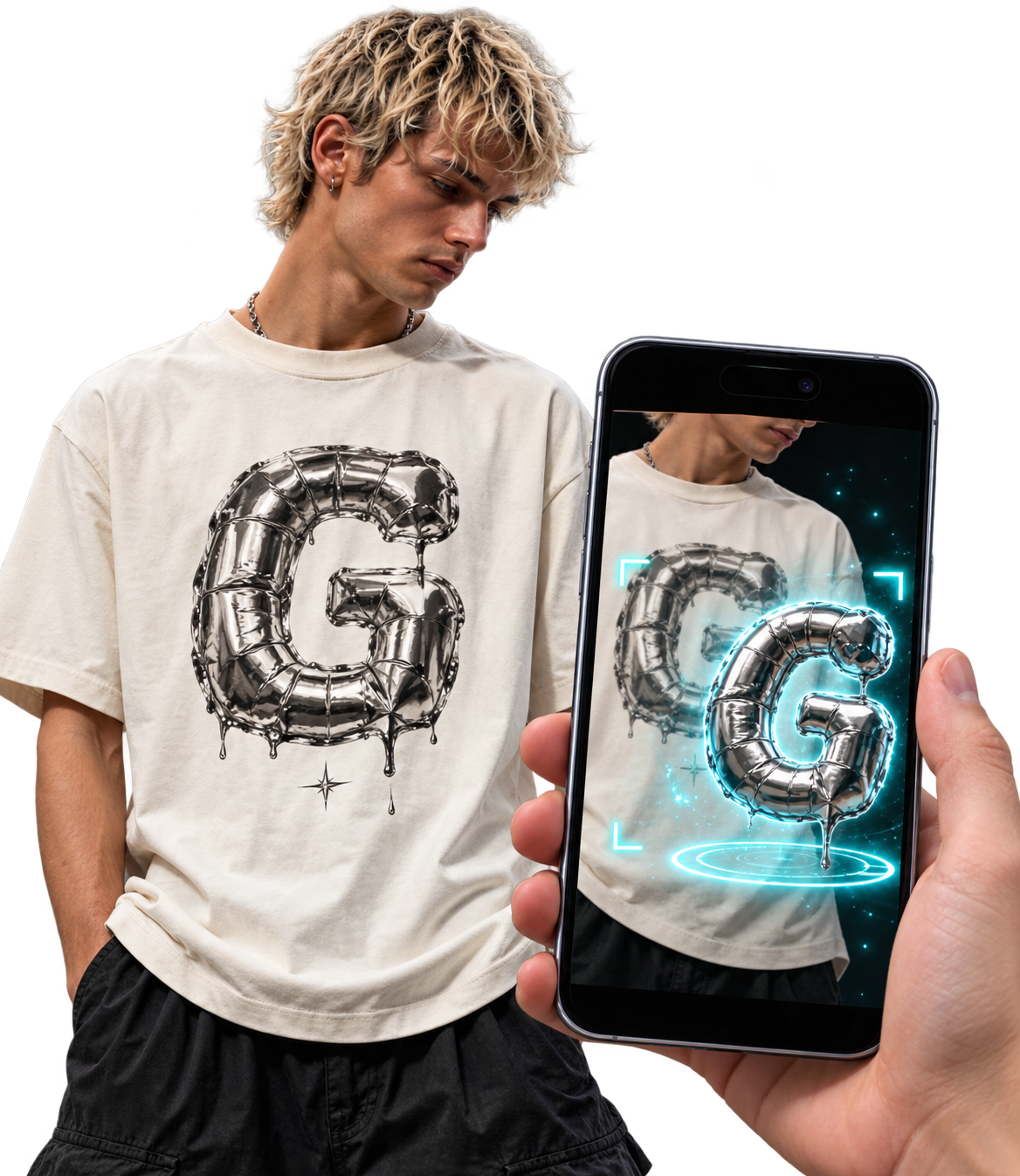
THE SHIRT IS
THE INVITATION.
The proposed app flow checks a supported design and the camera view. Recognition needs to work across folds, movement and changing light before it can be called ready.
The concept places the animated letter with the recognised design. Tracking keeps it aligned while the phone moves; animation, lighting and sound give it presence.
A verified discovery could open a collection entry, story or challenge. Exact unlocks and eligibility are design decisions still to be implemented. No clothing purchase currently guarantees a game reward.
What has to happen behind that camera view?
The app must first identify a supported target, then estimate its position and orientation. The renderer places the G in that coordinate space and updates it as the camera or fabric moves. An animation clip controls the letter’s motion; the camera feed supplies the real scene behind it.
A printed image on moving fabric is harder to track than a flat marker on a table. Recognition tests, stable tracking, asset performance and permission to use each design all come before a reliable release. The current website illustration is a visual brief for that work.